How Freelancers Can Automate Client Proposals With AI
Writing client proposals from scratch wastes valuable time and slows down your sales process. Learn how freelancers can use AI to automate proposal creation, personalize pitches, streamline follow-ups, and close projects faster without sacrificing quality.
How Freelancers Can Automate Client Proposals With AI
Winning freelance projects isn't just about having the right skills. It's about convincing potential clients that you're the right person to solve their problem.
Unfortunately, proposal writing is one of the most repetitive parts of freelancing. Every new inquiry often leads to the same cycle: reading client requirements, rewriting introductions, adjusting pricing, modifying timelines, and preparing deliverables. Hours disappear before any actual project work begins.
Artificial intelligence changes this process.
Instead of writing every proposal from scratch, freelancers can use AI to build a structured proposal workflow that creates personalized, professional proposals in minutes while still maintaining a human touch.
This guide explains how to automate proposal creation without sending generic templates that clients ignore. You'll learn how to combine reusable templates, AI-powered personalization, and automation tools into a workflow that saves time, improves consistency, and helps you respond to opportunities faster.
Who This Guide Is For
This workflow is ideal for professionals who regularly send proposals to potential clients.
It works particularly well for:
Freelance writers
Graphic designers
Web developers
Marketing consultants
Video editors
SEO specialists
Copywriters
No-code developers
Virtual assistants
Creative agencies
Whether you send two proposals each month or twenty every week, automating repetitive tasks allows you to spend more time delivering client work instead of writing sales documents.
Why Proposal Writing Takes So Much Time
Many freelancers underestimate how much time they spend preparing proposals.
A typical proposal often includes:
Reading the client's requirements
Understanding the project scope
Writing an introduction
Explaining relevant experience
Defining deliverables
Creating timelines
Preparing pricing
Adding terms and conditions
Proofreading
Sending follow-up emails
Even experienced freelancers may spend 30 to 90 minutes preparing a single customized proposal.
Multiply that across several opportunities each week, and proposal writing quickly becomes a major productivity bottleneck.
Why Generic Proposals Rarely Win Projects
One common misconception about AI is that it can instantly generate winning proposals.
Technically, it can generate proposals.
Winning proposals are different.
Clients often recognize generic proposals because they:
Sound impersonal.
Repeat clichés.
Ignore the client's actual problem.
Focus on the freelancer instead of the project.
Contain unnecessary buzzwords.
Lack specific solutions.
For example, compare these introductions:
Generic
I am an experienced freelancer with many years of expertise. I would love the opportunity to work on your project.
Now compare it with:
I noticed you're looking for a content workflow that reduces manual publishing while maintaining quality across multiple platforms. Based on your requirements, I've outlined a workflow that simplifies research, drafting, editing, and publishing while remaining scalable as your content grows.
The second version immediately demonstrates understanding.
AI should help you reach that level faster, not produce generic paragraphs.
Why AI Works Best as a Proposal Assistant
Think of AI as your proposal assistant rather than your salesperson.
Instead of asking it:
"Write a proposal."
Break the workflow into smaller tasks.
AI can help with:
Summarizing client requirements.
Identifying project goals.
Suggesting questions to ask.
Creating proposal outlines.
Drafting introductions.
Writing project scopes.
Explaining deliverables.
Creating timelines.
Improving readability.
Editing grammar and formatting.
By dividing the work into stages, proposals become more accurate and much easier to personalize.
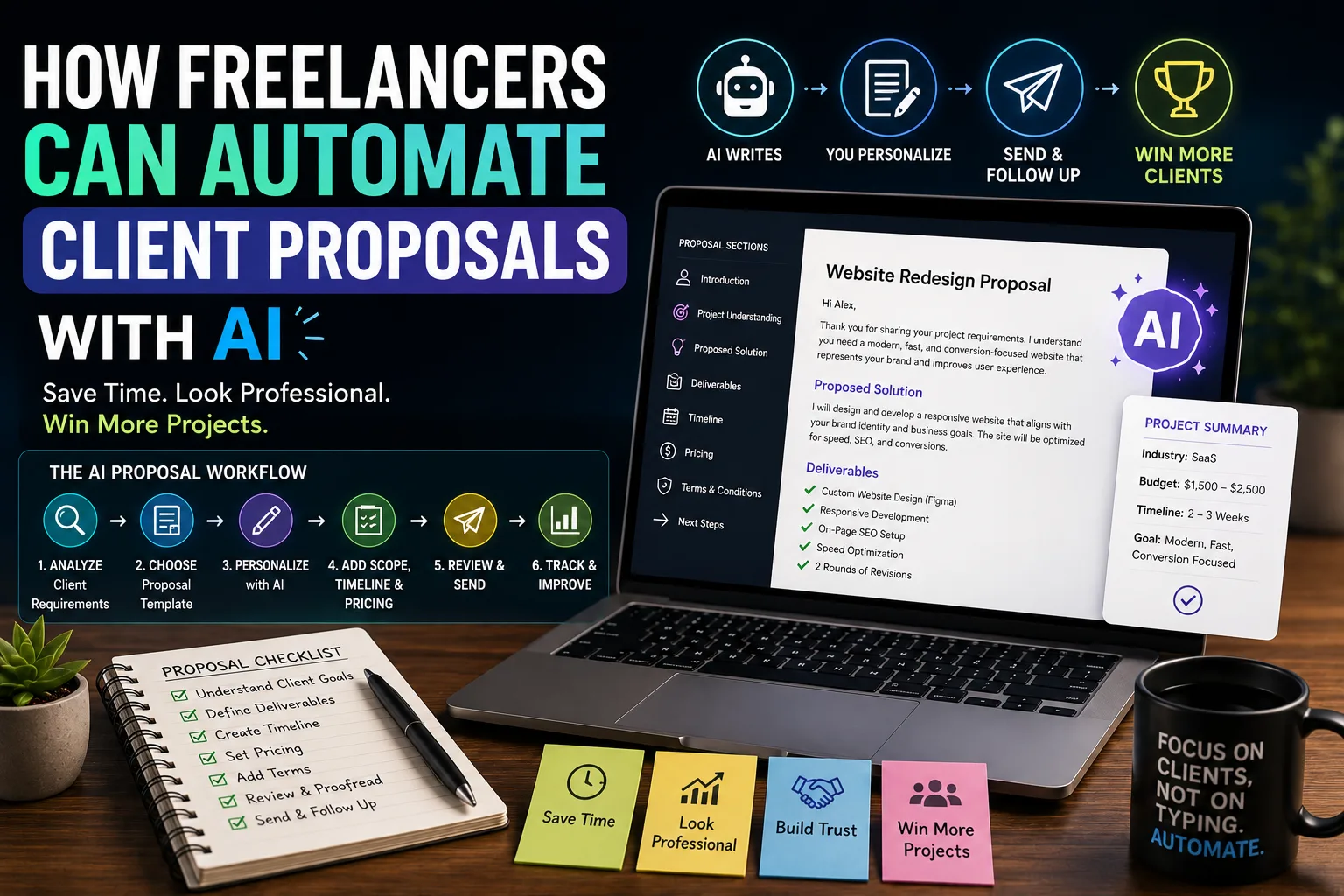
The AI Proposal Workflow
A practical proposal workflow follows these stages:
Collect client information.
Analyze project requirements.
Select the appropriate proposal template.
Personalize the proposal.
Define deliverables.
Create timelines.
Prepare pricing.
Review manually.
Send.
Schedule follow-ups.
Each stage removes repetitive work while preserving your expertise and judgment.
Step 1: Understand the Client Before Writing Anything
The biggest mistake freelancers make is opening a blank document immediately after receiving an inquiry.
Instead, spend a few minutes understanding the project.
Identify:
The client's objective
Their biggest challenge
Expected outcomes
Budget expectations
Timeline
Required skills
Potential risks
AI can summarize lengthy project descriptions and highlight important requirements.
For example, instead of reading a two-page project brief multiple times, ask AI to produce:
Project objectives
Required deliverables
Technical requirements
Possible client concerns
Clarifying questions
This creates a much stronger foundation before drafting begins.
Step 2: Build Reusable Proposal Templates
One of the biggest productivity improvements comes from creating templates.
Most proposals contain repeating sections.
Examples include:
Introduction
About your services
Portfolio links
Process overview
Deliverables
Timeline
Pricing
Terms
Closing message
Instead of rewriting these sections repeatedly, create reusable templates.
AI can then personalize only the parts that change from project to project.
This approach saves time while ensuring consistency across every proposal.
Step 3: Personalize Every Proposal
Templates save time.
Personalization wins projects.
Clients don't expect a completely unique proposal every time.
They do expect you to understand their business.
Ask AI to personalize:
Opening paragraph
Project summary
Proposed solution
Industry terminology
Tone
Examples
Benefits
For example, the proposal for a SaaS startup should sound very different from one written for a local restaurant, even if the service you provide is similar.
Step 4: Let AI Write the First Draft
Once you've gathered the necessary information, AI can assemble a structured first draft.
A professional proposal generally includes:
Introduction
Briefly acknowledge the client's project and demonstrate that you've understood their goals.
Understanding the Project
Summarize the client's objectives in your own words.
This reassures the client that you've carefully reviewed their requirements.
Proposed Solution
Explain how you intend to solve the problem.
Focus on outcomes rather than simply listing services.
Deliverables
Clearly define what the client will receive.
For example:
Landing page design
Blog articles
Keyword research
Website audit
Brand guidelines
Social media graphics
Clear deliverables reduce misunderstandings later.
Timeline
Break large projects into milestones whenever possible.
Example:
Week | Deliverable |
|---|---|
Week 1 | Discovery and planning |
Week 2 | First draft |
Week 3 | Revisions |
Week 4 | Final delivery |
Milestones make projects feel more manageable and demonstrate professionalism.
Pricing
AI can help explain pricing clearly, but you should always review numbers before sending proposals.
Instead of simply stating a price, explain what is included.
Clients are more likely to understand value when pricing is connected to outcomes rather than isolated figures.
Closing
Finish with a concise summary, invite questions, and explain the next step.
Avoid overly aggressive sales language.
Professional confidence is usually more persuasive than excessive enthusiasm.
Step 5: Create Reusable AI Prompt Templates
One of the biggest advantages of AI is consistency.
Instead of writing new prompts every time, build a small prompt library for common proposal tasks.
Examples include:
Summarize this client's requirements.
Create a proposal outline.
Rewrite this proposal for a startup founder.
Improve the professionalism of this introduction.
Simplify technical explanations.
Generate a project timeline.
Write a concise follow-up email.
Shorten this proposal by 20%.
Over time, these prompt templates become valuable assets that make proposal creation significantly faster.
Step 6: Keep a Proposal Knowledge Base
As you complete more projects, you'll notice that successful proposals often share common elements.
Instead of reinventing them, maintain a centralized knowledge base containing:
Successful proposal examples
Frequently used deliverables
Pricing frameworks
Discovery questions
Client testimonials
Portfolio descriptions
Industry-specific language
Case studies
Rather than asking AI to invent content every time, use this knowledge base as reference material.
This helps proposals become more accurate, consistent, and reflective of your actual experience.
Step 7: Automate Proposal Follow-Ups
Sending a proposal is only part of the sales process.
Many freelancers lose projects simply because they never follow up.
Clients are often busy, comparing multiple freelancers, or waiting for internal approvals. A polite follow-up can bring your proposal back to the top of their inbox.
AI can automate much of this process without making your communication feel robotic.
For example, you can prepare reusable follow-up templates for:
3 days after sending the proposal
7 days without a response
Checking if project requirements have changed
Thank-you messages after acceptance
Re-engaging previous leads
Each message should remain short, professional, and focused on helping the client rather than pressuring them into making a decision.
Step 8: Track Every Proposal
Many freelancers remember their proposals only after a client replies.
Instead, maintain a simple proposal tracker.
Your tracking system might include:
Property | Purpose |
|---|---|
Client Name | Company or individual |
Project | Short description |
Proposal Sent | Date |
Status | Draft, Sent, Follow-Up, Negotiation, Won, Lost |
Value | Estimated project value |
Follow-Up Date | Next contact |
Notes | Client feedback or discussions |
Whether you use Notion, Airtable, Trello, or another project management tool, tracking proposals helps you understand what's working and where your sales process can improve.
Step 9: Analyze Why Proposals Win or Lose
Winning more clients isn't only about sending more proposals.
It's about improving them over time.
After each project, review:
Which proposals received replies?
Which industries responded most often?
What objections did clients raise?
Which pricing structures converted better?
Which introductions generated positive feedback?
AI can summarize these observations and identify recurring patterns.
For example, if clients consistently respond well to proposals containing implementation timelines and measurable outcomes, make those sections a standard part of future proposals.
Over time, your proposal system becomes stronger because it's based on real results rather than assumptions.
Build an End-to-End Proposal Workflow
A mature AI-powered proposal workflow might look like this:
New Client Inquiry
│
▼
Analyze Project Requirements
│
▼
AI Summary & Key Requirements
│
▼
Select Proposal Template
│
▼
Personalize Introduction
│
▼
Generate Project Scope
│
▼
Create Timeline & Deliverables
│
▼
Review Pricing
│
▼
Manual Quality Check
│
▼
Send Proposal
│
▼
Schedule Follow-Up
│
▼
Track Outcome
│
▼
Improve Future Templates
This process minimizes repetitive work while keeping the final proposal tailored to each client.
Recommended Proposal Structure
A clear structure improves readability and makes it easier for clients to understand your offer.
A professional proposal typically includes:
Personalized introduction
Project understanding
Proposed solution
Scope of work
Deliverables
Timeline
Pricing
Assumptions and exclusions
Next steps
Closing message
Keeping the structure consistent also makes it easier for AI to generate accurate first drafts.
Common Mistakes When Using AI for Proposals
AI can save hours of work, but only when used thoughtfully.
Avoid these common mistakes.
Sending AI Output Without Editing
Clients notice generic proposals.
Always review the draft, adjust the tone, and include details that reflect the client's specific project.
Talking Too Much About Yourself
Many proposals spend several paragraphs describing the freelancer.
Clients care more about solving their problem than reading your biography.
Shift the focus toward:
Their objectives
Their challenges
Your proposed solution
Expected outcomes
Being Vague About Deliverables
Statements like:
"I'll help improve your website."
are less effective than:
"I'll redesign your landing page, optimize page speed, improve mobile responsiveness, and implement on-page SEO recommendations."
Specific deliverables reduce misunderstandings and build confidence.
Ignoring Proposal Length
Longer doesn't always mean better.
Most proposals should be concise, easy to scan, and structured with headings, bullet points, and short paragraphs.
If a proposal exceeds several pages, ensure every section adds meaningful value.
Forgetting the Human Review
AI can draft proposals quickly, but it doesn't know your availability, pricing strategy, or client relationship.
Before sending any proposal, verify:
Pricing
Dates
Deliverables
Names
Company information
Contact details
A two-minute review can prevent mistakes that damage credibility.
Frequently Asked Questions
Can AI write an entire proposal?
Yes, but it shouldn't send it for you.
AI is excellent at creating a structured first draft, while the freelancer remains responsible for personalization, pricing, and final approval.
Will clients know I used AI?
Not if you use it correctly.
Generic AI-generated proposals are easy to recognize.
Thoughtfully edited proposals that include project-specific insights read like professional business documents rather than AI-generated text.
Should I create different templates for different industries?
Absolutely.
A proposal for a healthcare client should sound different from one written for a SaaS startup or an e-commerce business.
Industry-specific templates improve both relevance and professionalism.
How many proposal templates should I maintain?
Most freelancers can cover the majority of their work with three to five templates, adapting each one to different project types instead of creating dozens of separate versions.
Freelancer Proposal Checklist
Before sending your next proposal, make sure you've completed the following:
□ Read the client's requirements carefully.
□ Summarize the project objectives.
□ Personalize the introduction.
□ Clearly define deliverables.
□ Include realistic timelines.
□ Review pricing and assumptions.
□ Add relevant portfolio examples.
□ Proofread the final document.
□ Schedule a follow-up reminder.
□ Record the proposal in your tracking system.
Final Takeaway
AI doesn't win freelance projects. Better communication does.
What AI provides is speed, consistency, and structure. It removes repetitive work so you can focus on understanding the client's goals, presenting thoughtful solutions, and building trust through personalized proposals.
The most successful freelancers don't automate relationships. They automate routine tasks around those relationships. By combining reusable templates, AI-assisted drafting, proposal tracking, and structured follow-ups, you can respond to opportunities faster without sacrificing quality.
As your proposal library grows, each new client becomes easier to serve because you're refining a proven system instead of starting from a blank page every time. Clients rarely remember how quickly you wrote the proposal. They remember how well it demonstrated that you understood their problem and had a credible plan to solve it.