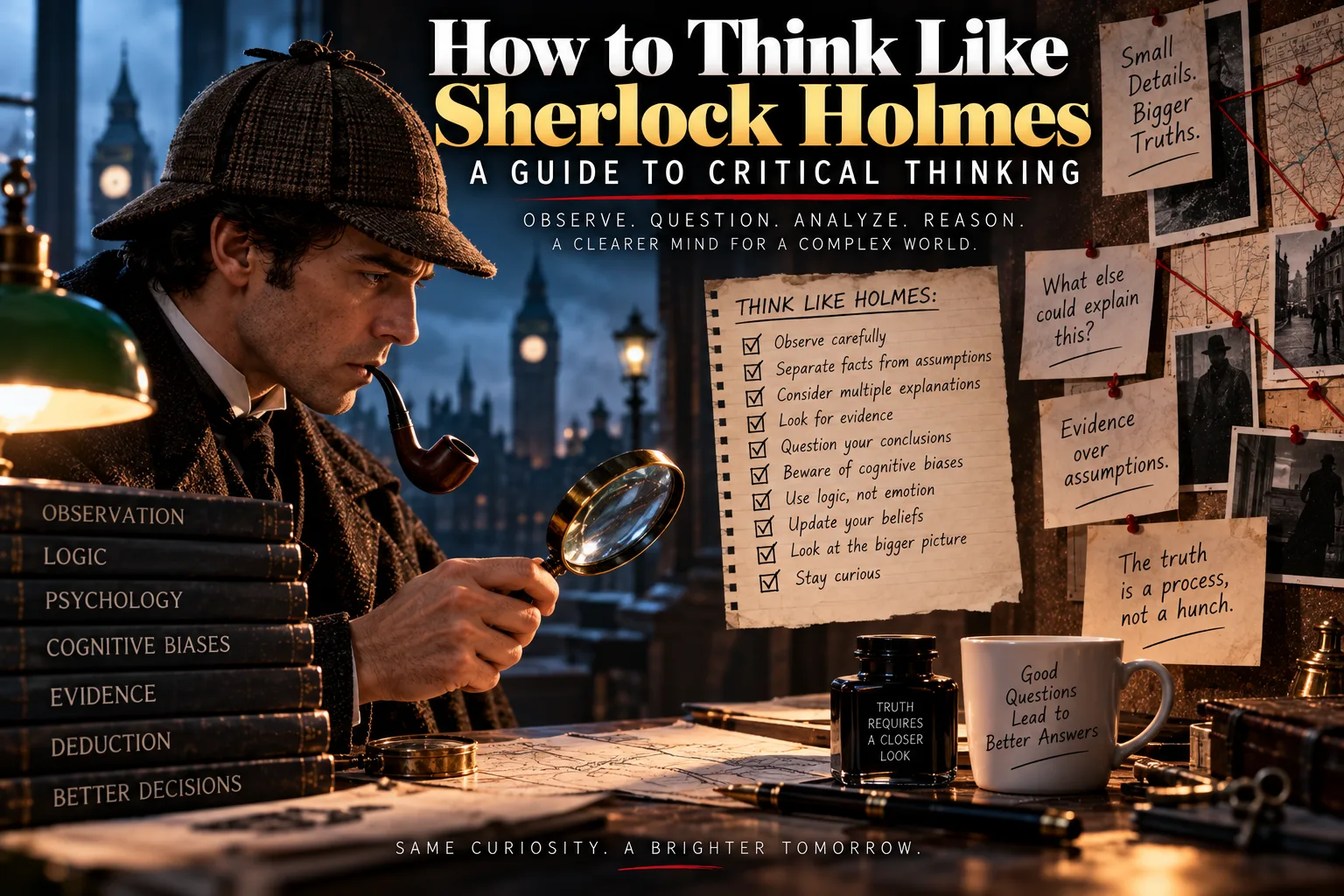
How to Think Like Sherlock Holmes: A Guide to Critical Thinking
Sherlock Holmes is fictional, but his approach to observation, evidence, questioning, and logical reasoning offers practical lessons for thinking more clearly and avoiding flawed assumptions.
How to Think Like Sherlock Holmes: A Guide to Critical Thinking
Sherlock Holmes walks into a room.
He notices muddy shoes.
A faint smell of tobacco.
A scratch on a watch.
A missing button.
Thirty seconds later, he has apparently reconstructed someone's profession, habits, recent journey, and personal history.
It feels like magic.
But Holmes isn't supposed to have supernatural powers.
His real advantage is supposed to be something much more interesting:
He notices information other people ignore.
Then he separates observation from interpretation.
He generates multiple explanations.
He tests them against evidence.
And, ideally, he changes his conclusion when the evidence changes.
Of course, Sherlock Holmes is a fictional character created by Arthur Conan Doyle. Real investigators cannot reliably determine someone's complete biography from one muddy shoe.
The useful part isn't copying Holmes's theatrical deductions.
It's understanding the reasoning habits underneath them.
Holmes gives us a fictional laboratory for a real question:
How can ordinary people become better at observing, questioning, and thinking before jumping to conclusions?
The First Rule: Observe Before You Explain
Most people don't simply observe.
They interpret immediately.
You see someone wearing an expensive suit.
Your brain may generate:
Successful.
You see someone looking at their phone repeatedly.
They're distracted.
You see a restaurant with a long line.
It must be excellent.
The problem is that these aren't observations.
They're interpretations.
A Holmes-style thinker tries to separate the two.
Observation
"His right sleeve is wet."
Interpretation
"He has recently been outside in the rain."
The first is directly observable.
The second is a hypothesis.
That distinction sounds minor.
It is enormous.
Observation vs. Inference
Suppose you walk into a room and see:
A broken glass.
Water on the floor.
An open window.
You might immediately conclude:
"Someone knocked the glass over."
But that's only one explanation.
Perhaps:
The wind blew it.
An animal knocked it over.
Someone dropped it.
The glass was already broken.
The water came from somewhere else.
A strong thinker doesn't immediately marry the first explanation that enters the room.
They keep it as a candidate.
Holmes' Greatest Skill Is Not Noticing Everything
People often imagine Holmes possesses photographic observation.
That's not the most useful lesson.
You don't need to notice everything.
You need to notice what is relevant.
Imagine entering a kitchen.
You could consciously observe:
Thirty-seven objects.
Three chairs.
A refrigerator.
Two windows.
A coffee machine.
A towel.
A light fixture.
Or you could ask:
"What information could help answer my question?"
That changes observation from passive seeing into active information gathering.
Attention Is a Limited Resource
You cannot consciously examine every detail simultaneously.
So excellent observers prioritize.
If you're trying to determine whether someone recently came from outdoors, useful clues might include:
Wet clothing.
Mud.
Temperature-related behavior.
Umbrella.
Footwear.
But the color of the wall probably doesn't matter.
The skill isn't:
Notice everything.
It's:
Notice strategically.
The Second Rule: Don't Let a Clue Become a Conclusion
Suppose you see mud on someone's shoes.
That's a clue.
It isn't a conclusion.
Possible explanations:
They walked through mud.
Someone spilled mud nearby.
The shoes weren't cleaned.
They stepped somewhere muddy earlier.
They work outdoors.
The clue narrows the possibilities.
It doesn't automatically identify one answer.
Good Reasoning Preserves Alternatives
This is one of the biggest differences between:
Observation
and
storytelling.
A storyteller wants a coherent explanation.
A critical thinker wants a well-supported explanation.
Those aren't always the same thing.
A story can feel incredibly satisfying while being completely wrong.
The Third Rule: Ask "What Else Could Explain This?"
This may be the most useful Sherlock-style question.
You notice:
Someone isn't responding to your messages.
First explanation:
They're angry.
Alternative explanations:
They're busy.
Their phone died.
They're asleep.
They didn't see the message.
They forgot.
They're dealing with something unrelated.
Notice what happened.
One observation.
Many possible explanations.
Your initial emotional interpretation is no longer the only available story.
Avoiding Single-Story Thinking
Single-story thinking occurs when one explanation becomes psychologically dominant too early.
You see a business losing money.
Bad management.
You see a student performing poorly.
Lazy.
You see someone acting strangely.
Rude.
You see a stock falling.
The company is failing.
Each could be true.
But the evidence doesn't automatically establish it.
Great problem-solvers keep multiple hypotheses alive until evidence separates them.
The Fourth Rule: Use Evidence to Eliminate Possibilities
Suppose you hear a noise outside.
Possible explanations:
A person.
A dog.
Wind.
A machine.
A falling object.
You look outside.
There is no person.
One hypothesis weakens.
You hear a dog bark.
Another becomes more plausible.
You see a tree branch moving.
The wind explanation gains strength.
This is basic reasoning:
Evidence changes the probability of explanations.
Deduction Isn't Magic
Holmes is frequently described as a master of deduction.
In ordinary language, people use "deduction" to mean intelligent inference generally.
But technically, deduction works differently from probabilistic reasoning.
A deductive argument starts with premises and derives a conclusion that must follow if those premises are true.
Example:
All mammals breathe air.
Whales are mammals.
Therefore:
Whales breathe air.
The conclusion follows necessarily from the premises.
Holmes-style mystery solving usually involves something messier:
inference from incomplete evidence.
That's closer to probabilistic reasoning, hypothesis testing, and what philosopher Charles Sanders Peirce called abduction, or inference to the best explanation.
The distinction matters because real life rarely gives us perfect premises.
Abduction: Finding the Best Explanation
Imagine finding:
Wet pavement.
People carrying umbrellas.
Dark clouds.
A weather forecast predicting rain.
What is the best explanation?
It probably rained.
Not logically guaranteed.
But strongly supported.
That's abductive reasoning:
What explanation best accounts for the available evidence?
This is much closer to the type of reasoning people admire in Holmes.
The Best Explanation Can Still Be Wrong
This is critical.
Suppose the pavement is wet.
Maybe it rained.
Or maybe:
A street-cleaning truck passed.
A sprinkler malfunctioned.
A pipe burst.
The strongest explanation isn't automatically certainty.
A mature thinker says:
"Rain is currently the leading explanation."
Not:
"Rain is the only possible explanation."
Confidence Should Match Evidence
This is one of the most powerful habits you can develop.
Don't think only:
What do I believe?
Also think:
How confident should I be?
For example:
"The package probably arrived."
is different from:
"The package definitely arrived."
The first leaves room for uncertainty.
The second claims much more than the evidence may justify.
Bayesian Thinking and Holmes
A useful way to formalize this is Bayesian reasoning.
Very simply:
Start with prior expectations.
Then:
Update them when new evidence appears.
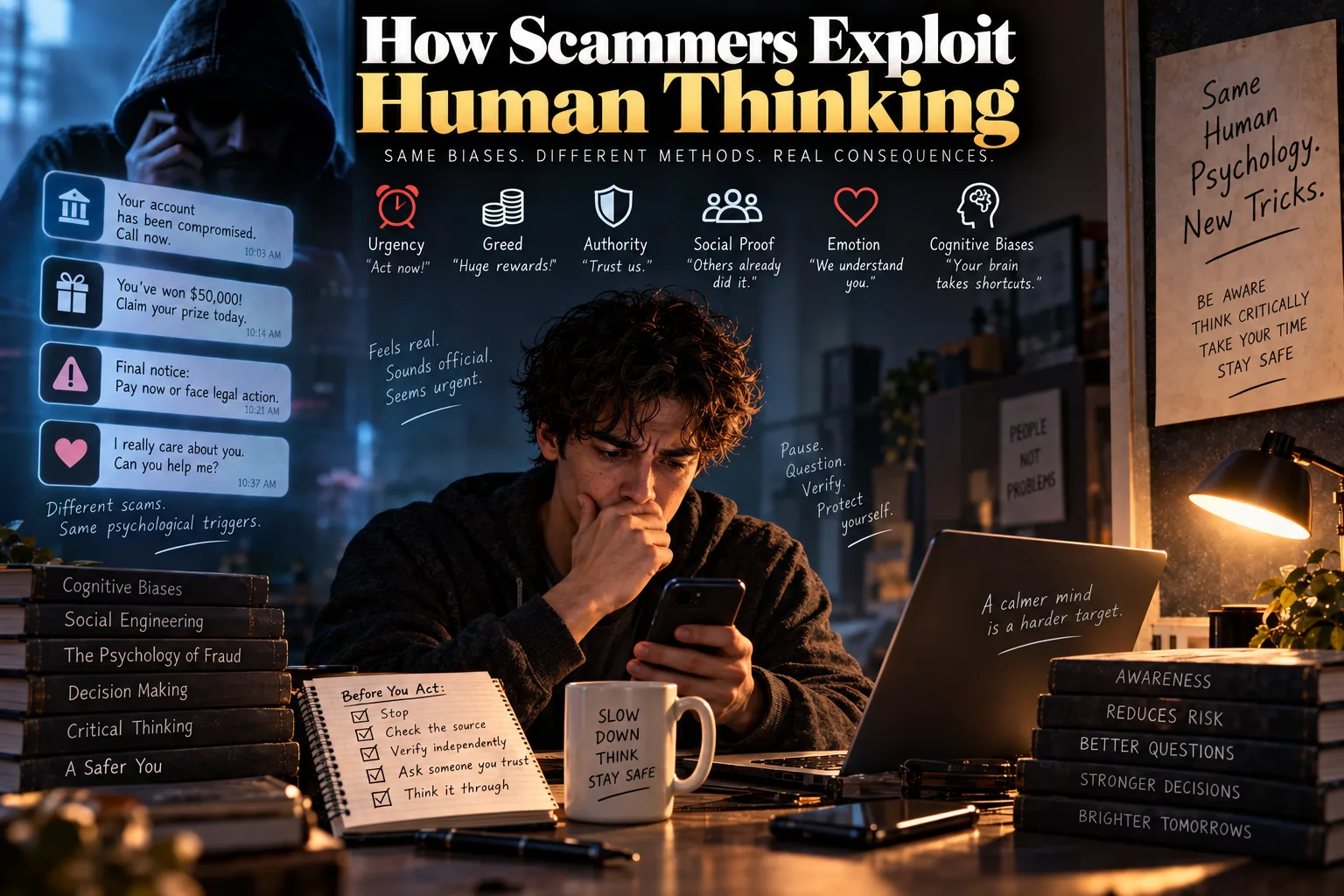
Suppose you receive a message from an unknown number.
You suspect it might be a scam.
Then the message contains:
A suspicious link.
Pressure to act immediately.
A request for a one-time code.
Your confidence that it's fraudulent should increase.
The evidence updates your belief.
Then suppose you independently confirm the message through the organization's official app.
Now your belief changes again.
Good reasoning is dynamic.
Evidence Isn't Equal
Not every clue deserves equal weight.
Suppose you're trying to determine whether someone was recently hiking.
Evidence:
They own hiking boots.
Weak evidence.
Millions of people own hiking boots without hiking today.
Their shoes are covered in fresh mud.
Stronger.
They have a park permit dated today and fresh trail debris on their clothing.
Stronger still.
The strength of evidence depends on how much it distinguishes one explanation from alternatives.
Rare Evidence Can Be Powerful
Suppose 90% of office workers own smartphones.
Someone owning a smartphone tells you almost nothing about their profession.
But imagine discovering they carry a specialized piece of equipment used by a particular occupation.
That may be much more informative.
A clue becomes valuable when it significantly changes the relative plausibility of competing explanations.
The Fifth Rule: Look for Disconfirming Evidence
Humans naturally search for evidence supporting what they already believe.
Holmes-style thinking requires asking the opposite:
"What would prove me wrong?"
Suppose you believe a product is excellent.
Don't only read positive reviews.
Search for:
Common complaints.
Refund reasons.
Long-term failures.
Independent testing.
Negative experiences.
Potential conflicts of interest.
The goal isn't to destroy the conclusion.
It's to test whether the conclusion survives criticism.
Falsification
Scientific thinking often emphasizes whether a claim can be tested in a way that could show it to be false.
A useful personal version is:
"What evidence would change my mind?"
If the answer is:
"Nothing."
then you're not really testing the belief.
You're protecting it.
The Sixth Rule: Beware of Confirmation Bias
You find evidence supporting your theory.
You feel smarter.
You find contradictory evidence.
You become suspicious.
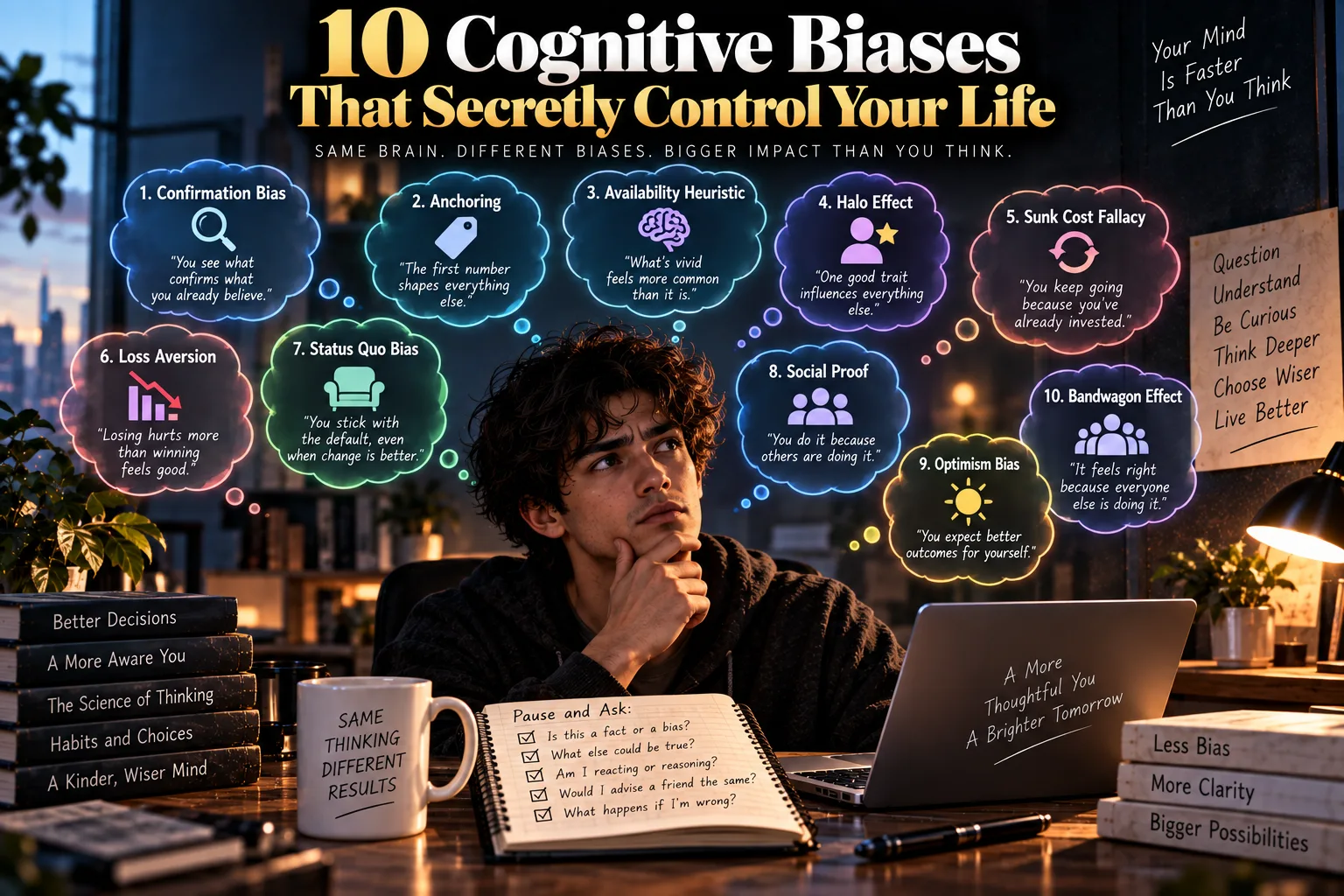
That's confirmation bias.
It can affect:
Politics.
Relationships.
Investing.
Medicine.
Business.
Friendships.
Even mystery solving.
Once Holmes suspects one person, a poorly written Holmes could interpret every clue as evidence against them.
The better habit is:
Try to prove your leading hypothesis wrong.
The Prosecutor and the Detective
Imagine you're trying to determine whether someone stole something.
A prosecutor asks:
"What evidence shows this person did it?"
A detective should also ask:
"What evidence would show they didn't?"
Those are very different mental habits.
If you only gather supporting evidence, you can become extremely confident in the wrong conclusion.
The Seventh Rule: Notice Base Rates
People sometimes become obsessed with unusual clues while ignoring what is normally common.
Suppose you hear scratching inside a wall.
Possible explanation:
A mouse.
A person might imagine:
Someone secretly hiding inside the building.
The unusual explanation is memorable.
The ordinary explanation is statistically more likely.
Good reasoning considers base rates.
What normally happens in situations like this?
Before believing an extraordinary explanation, ask whether ordinary explanations already account for the evidence.
"Occam's Razor" Is Not "The Simplest Story Wins"
Occam's Razor is often misunderstood.
It doesn't mean:
Always choose the shortest explanation.
It means that when explanations otherwise fit the evidence comparably well, we generally prefer one that introduces fewer unnecessary assumptions.
Suppose:
A light turns on.
Explanation A:
Someone entered the room and switched it on.
Explanation B:
A remote-controlled system activated because of a hidden sensor connected to a malfunctioning secondary network.
If both explain the observation equally well, the first requires fewer assumptions.
But simplicity is not proof.
Sometimes complicated explanations are true.
Sherlock's Famous "Eliminate the Impossible" Idea
Holmes is associated with a memorable principle:
Once impossible explanations have been eliminated, what remains deserves serious attention, however unlikely it may seem.
The useful version of this is:
Eliminate alternatives using evidence.
The dangerous version is:
If I can't think of another explanation, mine must be true.
Those aren't the same.
"Impossible" is a much stronger word than:
"I haven't found another possibility."
Unknown Doesn't Mean Impossible
Suppose scientists don't know exactly why a phenomenon occurred.
That doesn't automatically make every explanation equally plausible.
Likewise, saying:
"We don't know."
is not the same as:
"Therefore my preferred explanation must be correct."
Uncertainty should remain uncertainty until evidence narrows it.
The Eighth Rule: Separate Correlation From Causation
You notice two things happening together.
A conclusion forms:
A caused B.
Not necessarily.
Suppose umbrellas are more common when traffic accidents increase.
Did umbrellas cause accidents?
Probably not.
Rain may increase both.
This is a classic third-variable problem.
Ask What Mechanism Connects the Events
If you think:
A causes B
ask:
How?
What mechanism connects them?
Suppose a new software update is followed by a productivity increase.
Possible mechanism:
The update fixed a major problem.
But perhaps:
A deadline forced everyone to work harder.
A new manager arrived.
A slow project ended.
The economy changed.
A vacation period ended.
Without understanding mechanism, temporal association can mislead.
The Ninth Rule: Ask What Information Is Missing
Every observation has a boundary.
You see someone leaving a building.
You don't know:
Where they're going.
Why they're leaving.
How long they've been inside.
Who they're meeting.
You see the first five minutes.
There may be another hour of relevant context you haven't observed.
Great thinkers recognize missing information.
Absence of Evidence Is Not Always Evidence of Absence
Suppose you search a dark room and don't see a cat.
Does that prove there isn't one?
No.
Maybe it's hiding.
Maybe the lighting is poor.
Maybe you didn't search thoroughly.
But in some circumstances, failing to detect something can be evidence against its presence.
The important question is:
How capable was the search of detecting the thing?
Medical Testing Uses This Logic
Suppose a diagnostic test is very sensitive.
A negative result may meaningfully reduce the probability of disease.
A weak test may not.
The absence of a positive result only matters relative to how reliably the test would have detected the condition if it were present.
Evidence has context.
The Tenth Rule: Look at Incentives
A remarkably useful question is:
"What does this person gain if I believe them?"
This doesn't automatically mean they're lying.
But incentives affect behavior.
Suppose:
A salesperson says a product is essential.
A financial influencer recommends an investment.
A politician promotes a policy.
A company publishes a report about its own performance.
A reviewer receives free products.
The claim can still be true.
But the incentive structure matters.
Incentives Don't Prove Deception
This distinction is important.
Finding a financial incentive does not mean:
"Therefore the person is lying."
It means:
"There is a reason to examine the evidence carefully."
Otherwise you simply replace one bias with another.
The Eleventh Rule: Watch for Missing Alternatives
Suppose someone gives you two choices:
Buy now or miss the opportunity forever.
They may have quietly hidden a third option:
Don't buy.
This is called a false dilemma.
Complex situations often contain more possibilities than the speaker presents.
Great thinkers ask:
"What option isn't being mentioned?"
The Third Option
You're choosing between:
A job you dislike.
Or unemployment.
Maybe there is:
A different job.
Part-time work.
Negotiation.
Training.
Temporary employment.
The original framing can make the decision appear simpler than it actually is.
Always look for the missing door.
The Twelfth Rule: Watch Your Own Emotions
Holmes is often portrayed as emotionally detached.
You don't need to become emotionally cold.
But you should know that emotions influence judgment.
Anger can make hostile explanations feel more plausible.
Fear can make threats feel larger.
Excitement can make opportunities look better.
Love can soften skepticism.
Embarrassment can make criticism feel more threatening.
The goal isn't eliminating emotion.
It's recognizing when emotion is altering your evidence standards.
The Same Evidence Looks Different When You're Angry
Imagine two people send you the same message:
"Okay."
When you're calm:
Probably neutral.
When you're angry:
Definitely passive-aggressive.
Same words.
Different psychological state.
The message didn't change.
Your interpretation did.
The Thirteenth Rule: Don't Confuse Confidence With Accuracy
Someone speaks confidently.
They know many details.
They sound intelligent.
Therefore:
They must be correct.
Not necessarily.
Confidence is a psychological signal.
It isn't proof.
The more useful question is:
How well calibrated is this person's confidence?
Do their past predictions match reality?
Can they explain their evidence?
Do they acknowledge uncertainty?
Do they update when wrong?
Experts Can Still Be Wrong
Experts are valuable because they possess specialized knowledge.
But expertise has boundaries.
A brilliant physicist isn't automatically an authority on:
Nutrition.
Macroeconomics.
Psychology.
Real estate.
Education.
Geopolitics.
Even within a field, experts can disagree.
The solution isn't distrusting experts.
It's understanding what the expertise actually covers.
The Fourteenth Rule: Keep a Hypothesis Log
This is where Holmes-style reasoning becomes practical.
When facing an uncertain situation, write down:
What I think happened.
Why I think it.
What evidence supports it.
What evidence contradicts it.
What would change my mind.
Then revisit it later.
This turns vague intuition into something testable.
Prediction Makes Thinking More Honest
Suppose you believe:
"This project will succeed."
Write:
Probability: 70%.
Expected outcome:
Break-even within six months.
Now revisit later.
Did it happen?
Why?
Which assumptions were wrong?
This helps separate:
Good reasoning that produced a bad outcome
from
Bad reasoning that happened to get lucky.
That distinction matters.
The Fifteenth Rule: Use the "Five Whys"
When something goes wrong, ask:
Why?
Then ask why again.
Example:
The project failed.
Why?
The launch was late.
Why?
Testing took too long.
Why?
Requirements kept changing.
Why?
Different teams had different specifications.
Why?
Nobody defined a shared product requirement.
Now the root issue looks different from:
"The developers were too slow."
Don't Stop at the First Explanation
The first explanation often describes the nearest visible cause.
Keep asking.
A broken machine may not be the real problem.
Why did it break?
Maintenance failure.
Why?
No maintenance schedule.
Why?
Budget priorities.
Why?
Management believed downtime risk was low.
Now the problem becomes organizational rather than mechanical.
This is systems thinking applied to root causes.
The Sixteenth Rule: Think Like a Scientist
Scientists don't simply ask:
"Can I explain this?"
They ask:
"Can competing explanations also explain it?"
Suppose a treatment appears to work.
Possible explanation:
The treatment is effective.
Other possibilities:
Natural recovery.
Placebo effects.
Regression to the mean.
Selection effects.
Measurement error.
If several explanations predict the same observation, the observation alone may not tell you which one is true.
Controlled Tests Matter
Imagine changing one variable at a time.
You want to know whether:
A new website design increases purchases.
Run:
Version A.
Version B.
Compare outcomes.
The exact experiment will depend on circumstances.
But the underlying principle is powerful:
Change something deliberately and observe what follows.
Experiments turn arguments into evidence.
The Seventeenth Rule: Use a Probability Ladder
Not every conclusion needs to be:
True.
or
False.
You can think in levels.
Very unlikely
Unlikely
Possible
Plausible
Likely
Very likely
This reflects how real reasoning often works.
Suppose you hear a strange noise.
You don't need to decide immediately:
"It was definitely a burglar."
You can think:
"Possible, but currently unlikely."
That leaves room for evidence.
The Danger of False Certainty
Once people commit to:
"I know what happened."
new evidence can become psychologically threatening.
A probabilistic mindset makes updating easier.
Instead of:
"I was right."
you can say:
"My 70% hypothesis has dropped to 30%."
Changing your confidence is not failure.
It's learning.
The Eighteenth Rule: Use Details Carefully
Holmes stories love tiny details.
A cigar ash.
A footprint.
A button.
A newspaper.
These details can matter.
But small details can also be misleading.
One clue may be:
Incorrectly observed.
Unrelated.
Misremembered.
Planted.
Misinterpreted.
The smaller the clue, the more important its context becomes.
Don't Build a Giant Theory on One Tiny Detail
You notice someone frequently carrying an umbrella.
Conclusion:
They work outdoors.
Possible.
But maybe:
They simply like umbrellas.
They live somewhere rainy.
They have a medical reason to avoid sunlight.
They keep forgetting to remove it from their bag.
One clue rarely proves a complex theory.
The Nineteenth Rule: Use Source Reliability
Not all information sources deserve equal weight.
Ask:
Who observed this?
How close were they to the event?
Could they benefit from the claim?
Did they document it contemporaneously?
Could they have misunderstood?
Do independent sources agree?
Does physical evidence support the claim?
This is particularly important with:
History.
Crime.
Medical claims.
News.
Online rumors.
A Screenshot Isn't the Same as a Source
Modern information creates a new problem.
People show:
Screenshots.
Clips.
Quotes.
Posts.
Images.
These can look like evidence.
But you should ask:
Where did it come from?
When was it created?
Has it been edited?
What happened before and after?
Is the account authentic?
Can the original be located?
A fragment of information can be real while its context is false.
The Twentieth Rule: Think About What Would Have to Be True
Suppose someone makes a large claim.
Instead of arguing immediately, ask:
"What would have to be true for this claim to work?"
Then test those assumptions.
Example:
"This company can grow tenfold next year."
What must be true?
Customer demand must rise.
Production must scale.
Capital must exist.
Retention must remain strong.
Competitors must not capture the market.
Margins must support growth.
Now you've transformed one dramatic statement into several testable claims.
Great Thinkers Turn Claims Into Questions
Claim:
"This is the best strategy."
Questions:
Best for whom?
Under what conditions?
Compared with what?
Over what time period?
What evidence supports it?
What could make it fail?
What would change the conclusion?
The dramatic claim becomes an investigation.
Why Sherlock Holmes Seems Superhuman
Arthur Conan Doyle often gives Holmes abilities beyond what ordinary people could realistically reproduce.
He notices clues instantly.
He remembers obscure facts.
He connects distant pieces of evidence.
He reconstructs hidden events.
This is fiction.
But the underlying idea is real:
Experts notice patterns that beginners don't notice.
A doctor notices symptoms.
A mechanic hears an unusual engine sound.
A programmer sees a familiar bug pattern.
A detective notices inconsistencies.
Expertise changes perception because knowledge changes what becomes meaningful.
The Real Superpower Is Knowledge + Observation
Observation without knowledge is limited.
Knowledge without observation is also limited.
Suppose you see a strange electrical component.
Someone with no technical background sees:
A weird metal object.
An electrical engineer may see:
A specific component.
Its purpose.
Potential failure modes.
Signs of overheating.
Possible installation errors.
The object hasn't changed.
The observer has.
Build a Mental Library
Holmes appears extraordinary partly because he possesses extensive specialized knowledge.
You can develop smaller versions of this.
Learn:
Basic statistics.
Logic.
Psychology.
Economics.
Scientific reasoning.
Your profession.
Communication.
Research methods.
The more knowledge you have, the more patterns become visible.
But Avoid the "Everything Is a Clue" Problem
Pattern recognition can go too far.
A person who learns about conspiracy theories may start seeing conspiracies everywhere.
A trader studying charts may see patterns in random price movement.
A medical student may begin noticing diseases in every symptom.
Knowledge increases pattern detection.
It does not guarantee meaningful pattern detection.
The Difference Between Signal and Noise
Complex environments contain:
Signal
information related to what you're trying to understand.
Noise
information that is irrelevant or misleading.
A major skill is deciding which is which.
Suppose your website's sales drop.
Signal:
Conversion rate fell.
Noise:
You changed the office wallpaper.
Your brain can connect almost anything.
Critical thinking asks whether the connection matters.
A Useful Rule: Prefer Repeated Patterns Over One-Off Coincidences
One strange event can be coincidence.
Ten similar independent events deserve investigation.
Suppose one day:
Traffic decreases.
Another day:
Traffic decreases.
Then again.
Now you investigate.
Maybe there's:
A technical problem.
A seasonal pattern.
A marketing change.
A search-ranking change.
Repeated observations can turn vague suspicion into evidence.
But Repetition Alone Isn't Proof
A repeated pattern can still be misleading.
Suppose ice-cream sales and sunburn cases rise together.
The shared cause is likely summer heat.
Pattern recognition identifies an association.
Reasoning finds the mechanism.
The "What Changed?" Question
When something changes, ask:
What changed immediately before the outcome?
Then:
What else changed?
Suppose your productivity suddenly drops.
Possible factors:
Sleep.
Diet.
Stress.
Workload.
Environment.
Software.
Health.
Schedule.
Don't assume the most recent change is necessarily the cause.
But it provides a starting point for investigation.
The "Compare With Baseline" Principle
Something only looks unusual relative to a baseline.
A company makes $100,000 this month.
Is that good?
You need context.
Last month:
$50,000.
Last year:
$120,000.
Industry average:
$300,000.
The same number can mean completely different things under different baselines.
Why Context Is Everything
A blood pressure reading.
A stock price.
A test score.
A salary.
A number of website visitors.
A crime statistic.
none means much by itself.
You need:
Time.
Population.
Comparison group.
Measurement method.
Definition.
A Holmes-style thinker asks:
"Compared with what?"
The "What Would Surprise Me?" Test
Before looking at evidence, ask:
"What result would genuinely surprise me?"
Suppose you believe your new product will succeed.
What outcome would challenge that belief?
If almost nothing could surprise you, your conclusion may already be fixed.
Good thinking leaves room for surprise.
The "Explain the Opposite Side" Exercise
Pick a conclusion you strongly believe.
Now argue the strongest case against yourself.
Not a ridiculous caricature.
The best version of the opposing argument.
This is called steelmanning.
It forces you to engage with stronger evidence.
It can also reveal whether your confidence survives serious opposition.
Why This Works
If your argument collapses immediately under the strongest counterargument, you learned something useful.
If it survives, your confidence may reasonably increase.
Either result is valuable.
The goal wasn't to win.
It was to improve the model.
The Most Important Holmes Habit: Curiosity
At the center of good reasoning is curiosity.
Not:
"How can I prove myself right?"
But:
"What is actually going on?"
Curiosity makes uncertainty interesting instead of threatening.
You notice something strange.
You don't immediately fill the gap with a story.
You investigate.
That is the intellectual habit worth copying from Holmes.
🟢 Established Evidence
The practical reasoning techniques discussed here connect to established methods in psychology, statistics, science, and decision-making:
Observation and hypothesis testing.
Probabilistic reasoning.
Bayesian updating.
Attention and selective perception.
Cognitive-bias research.
Experimental comparison.
Base-rate reasoning.
Falsification.
Causal inference.
Source evaluation.
These approaches do not make anyone infallible.
They reduce predictable errors.
🟡 Active Debate
Researchers continue debating the reliability of different reasoning methods in real-world settings.
Human judgment varies with:
Expertise.
Time pressure.
Emotion.
Information quality.
Environment.
Feedback.
A method that works well in one domain may fail in another.
Even experts can make systematic errors.
Critical thinking is therefore not a permanent achievement.
It is a continuing practice.
🔴 Popular Myth
"Sherlock Holmes uses pure deduction."
Not exactly.
The fictional Holmes uses a mixture of:
Observation.
Inference.
Hypothesis generation.
Background knowledge.
Pattern recognition.
Probabilistic judgment.
What matters most is not labeling every Holmes conclusion as technically "deduction."
It's understanding the reasoning process underneath the story.
Frequently Asked Questions
Is Sherlock Holmes a real person?
No. Sherlock Holmes is a fictional detective created by Arthur Conan Doyle.
Can real people actually reason like Sherlock Holmes?
To a limited extent. People can become much better at observation, evidence evaluation, hypothesis testing, and logical reasoning, but fictional Holmes-level instant deductions are heavily dramatized.
What is the biggest Sherlock Holmes lesson?
Separate observations from interpretations and test explanations against evidence before committing to a conclusion.
Is deduction the same as critical thinking?
No. Deduction is one form of reasoning. Critical thinking also involves evaluating evidence, assumptions, alternatives, probabilities, and sources.
What should I do when I notice a clue?
Treat it as evidence, not an automatic conclusion. Ask what else could explain it.
How can I improve observation?
Pay deliberate attention to relevant details, describe what you actually see before interpreting it, and practice noticing changes and inconsistencies.
How can I avoid jumping to conclusions?
Generate multiple explanations, consider base rates, look for disconfirming evidence, and distinguish possibility from probability.
Why does expertise make people better observers?
Knowledge helps people recognize which details are meaningful and which are irrelevant. Experts have richer mental models of their domain.
Can intuition be trusted?
Sometimes. Intuition tends to be more reliable in environments where patterns are stable and feedback is frequent. It is less reliable in unfamiliar or highly uncertain environments.
What's the best question to ask when solving a mystery?
A very useful one is: "What else could explain this?"
Final Thoughts
Sherlock Holmes isn't really interesting because he notices a footprint and magically knows who made it.
He's interesting because he represents an idealized way of thinking.
Observe.
Separate fact from interpretation.
Question assumptions.
Generate alternatives.
Consider base rates.
Look for causes.
Test hypotheses.
Search for disconfirming evidence.
Update your beliefs.
Match confidence to evidence.
And stay curious.
The most important part is probably the simplest:
Don't fall in love with your first explanation.
Your brain wants closure.
It sees three clues and wants a story.
It sees a strange event and wants a cause.
It sees uncertainty and wants an answer.
That instinct is useful.
It's also where many reasoning errors begin.
A better approach is to hold your conclusion lightly.
Say:
"This is my current best explanation."
Not:
"This must be what happened."
Then look for evidence.
If the evidence supports your theory, confidence increases.
If it contradicts your theory, change it.
No drama.
No ego.
No elaborate defense of an idea simply because it was yours.
That's what real critical thinking looks like.
And perhaps that's the closest real-world version of the Sherlock Holmes method.
You don't need a deerstalker hat.
You don't need a mysterious London apartment.
You don't need to identify someone's entire life from their shoelaces.
You need something much less glamorous:
The willingness to look carefully, think slowly, and admit when the evidence says you were wrong.
Because the smartest person in the room isn't necessarily the one who has the fastest answer.
Sometimes it's the person who is still asking:
"What am I missing?"